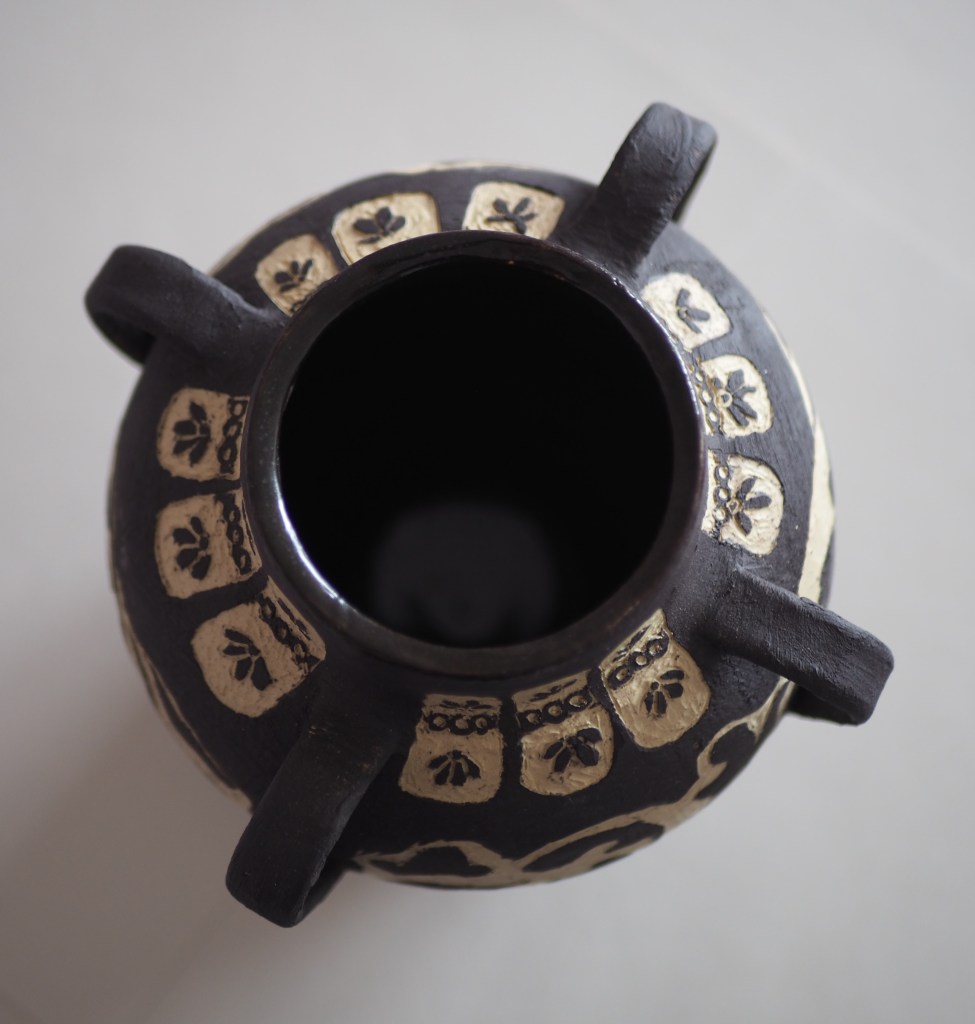
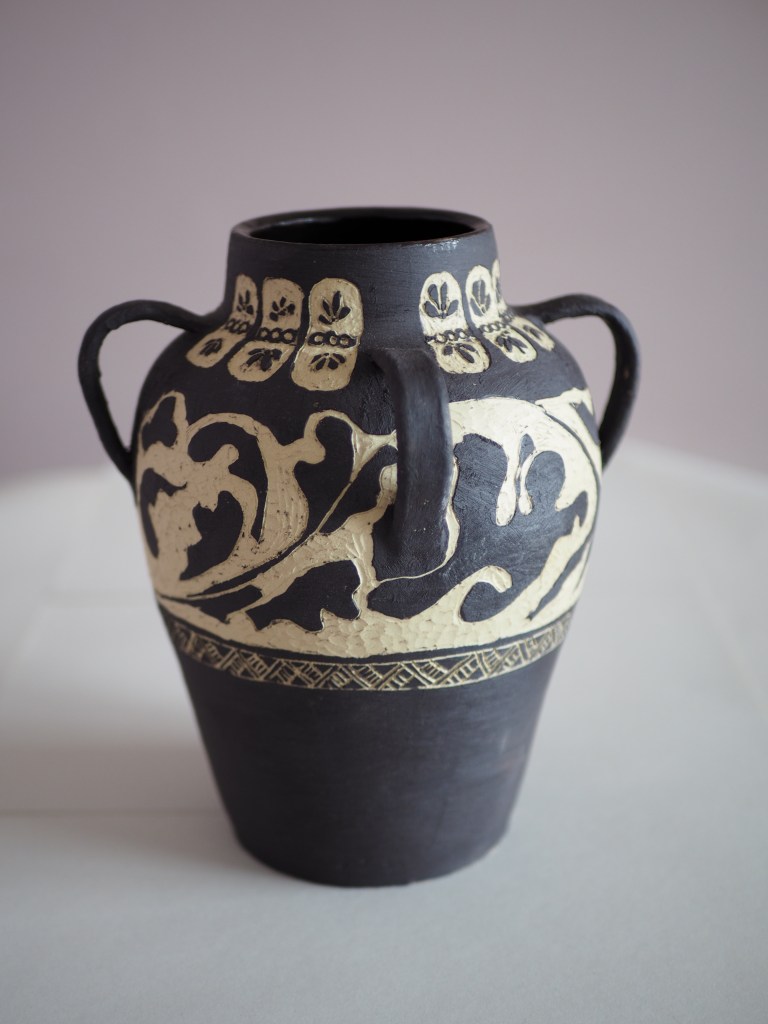
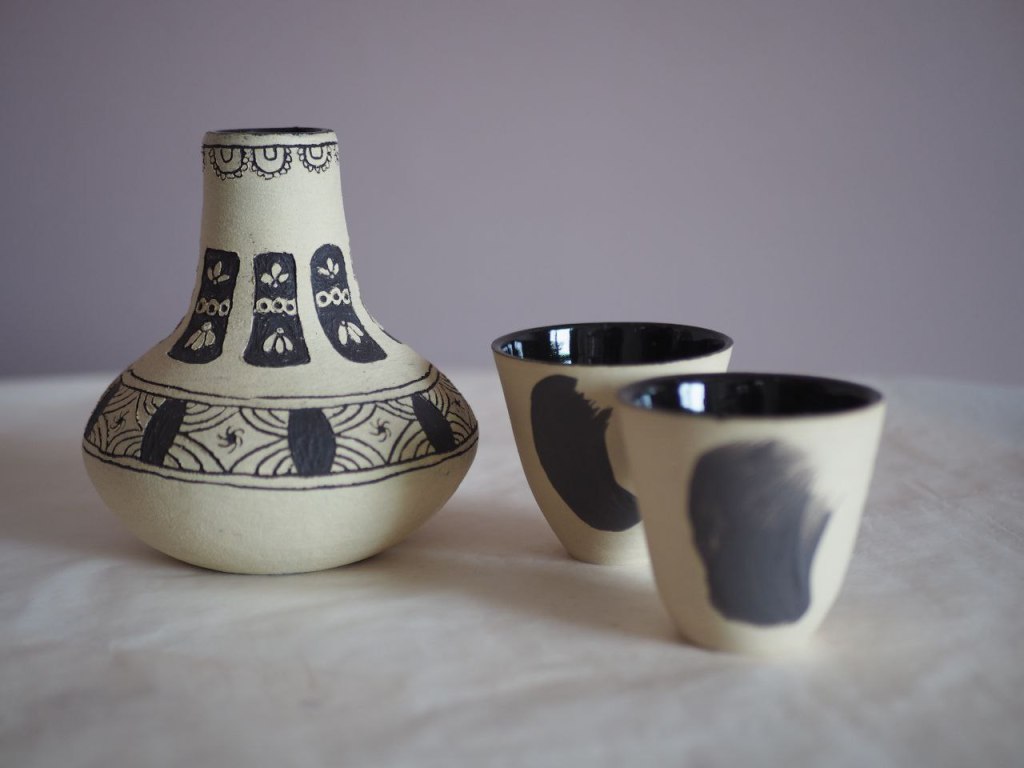
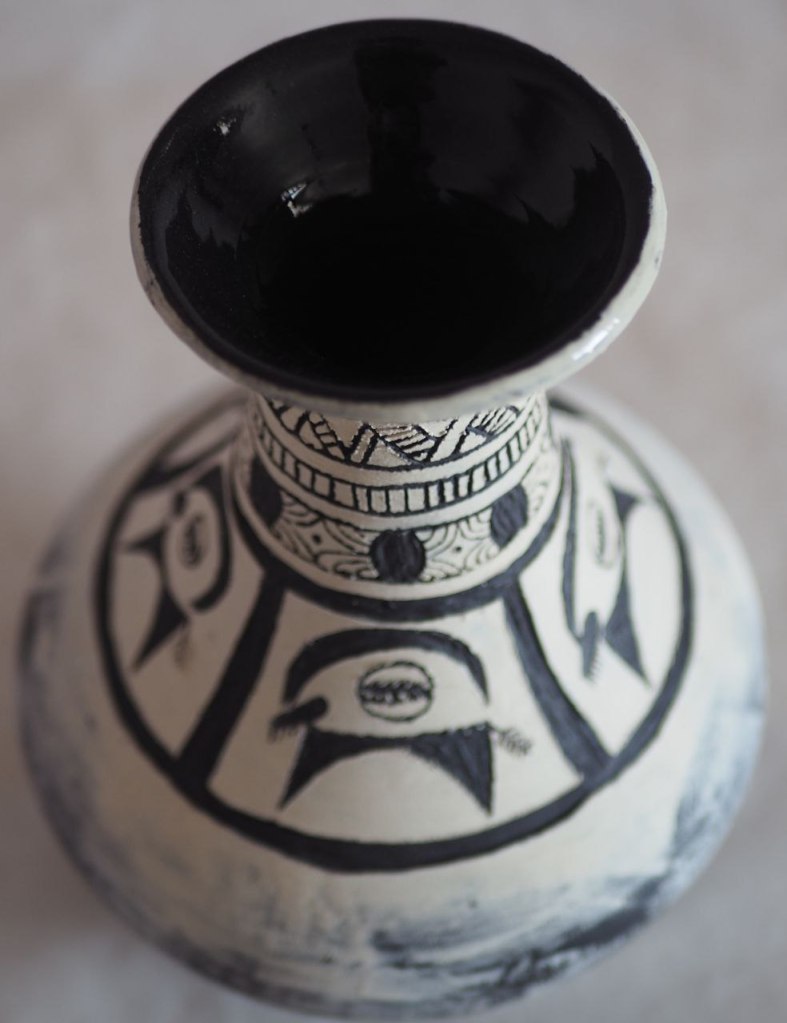
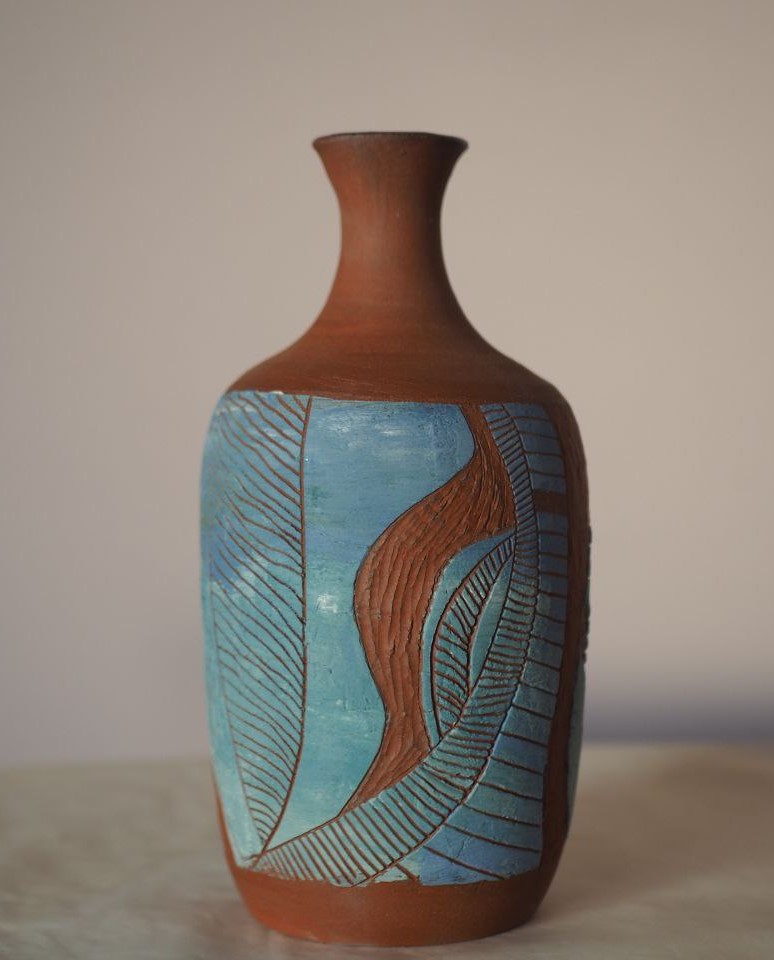
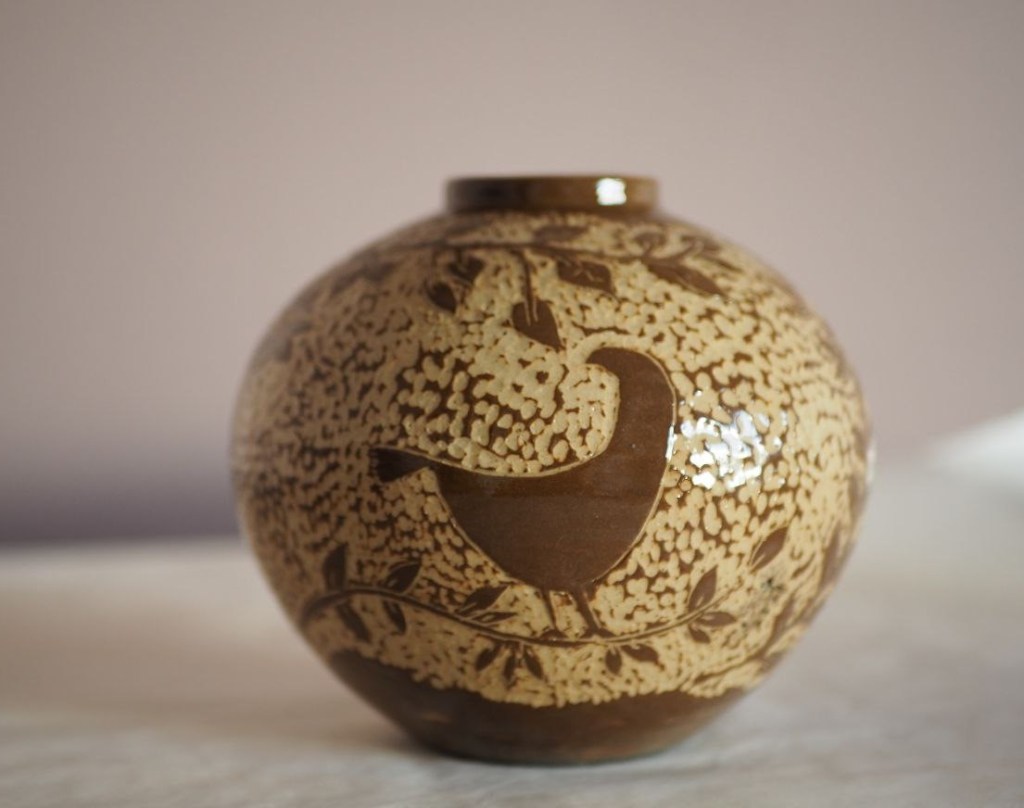
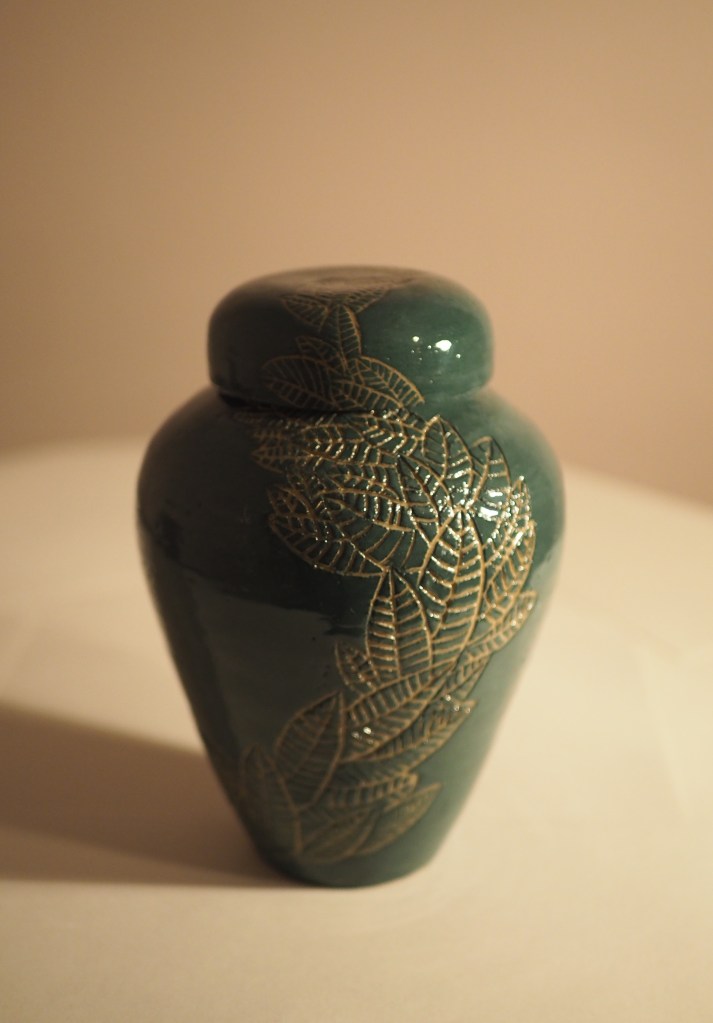
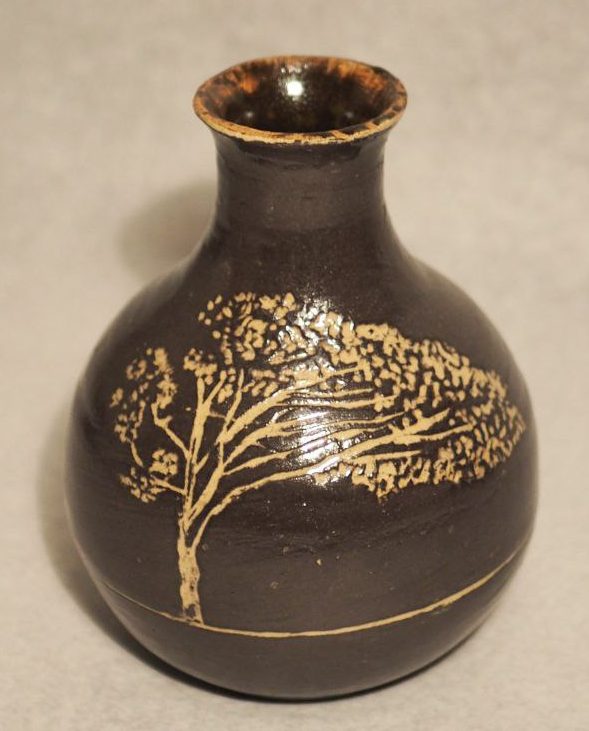
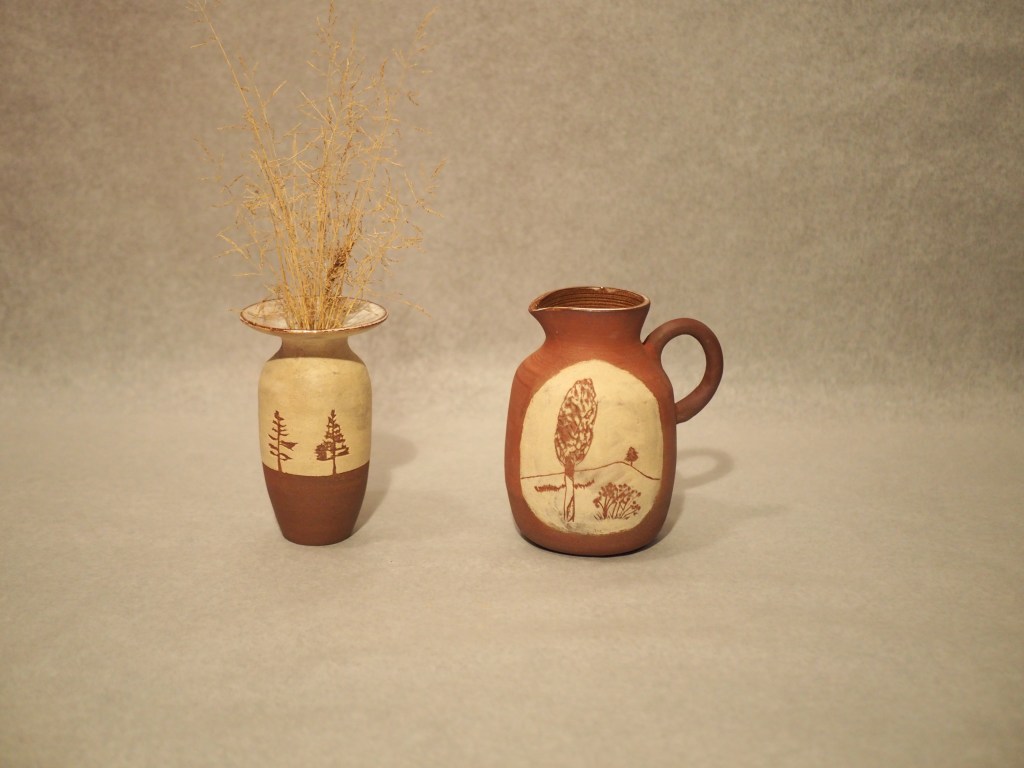
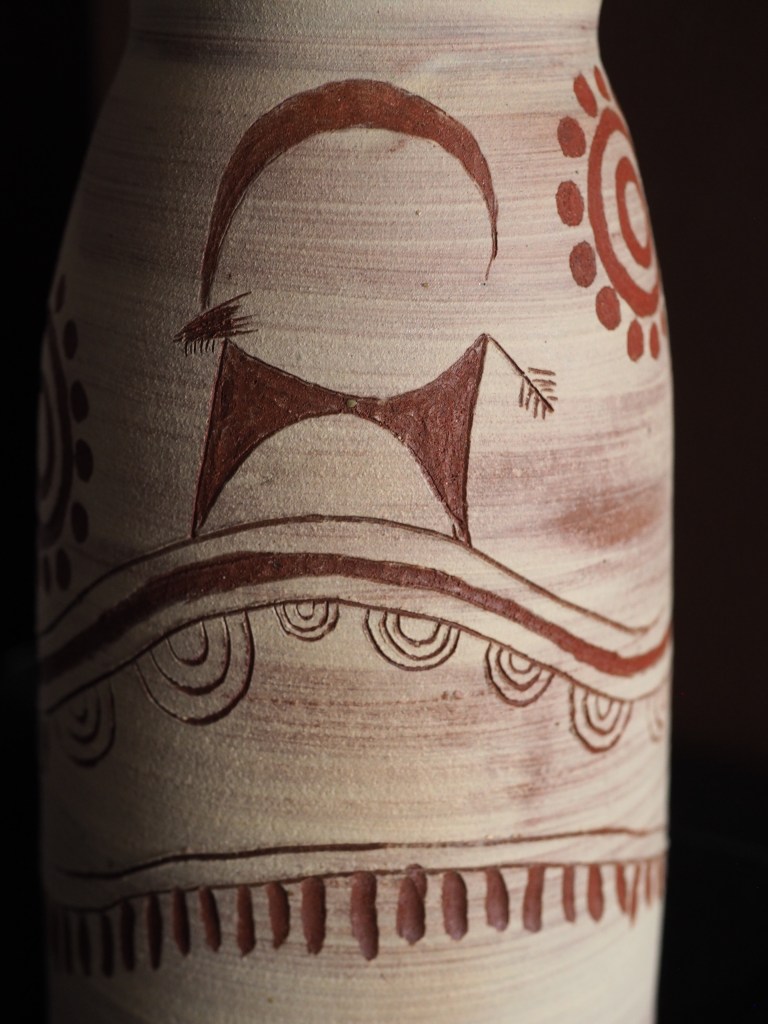
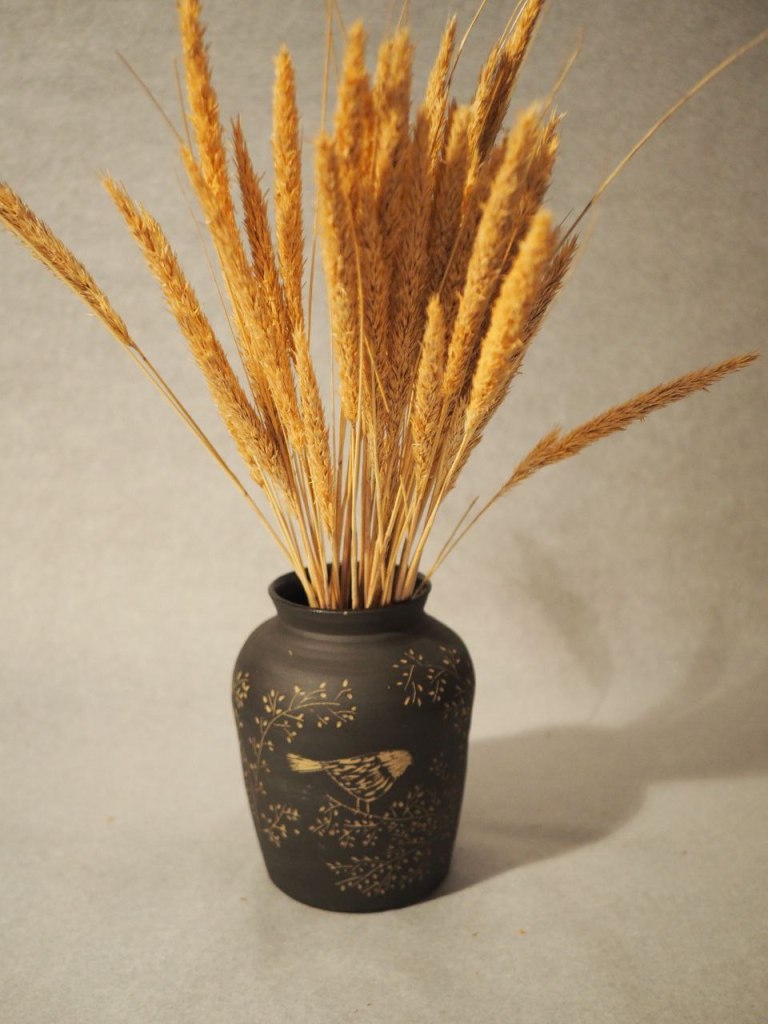
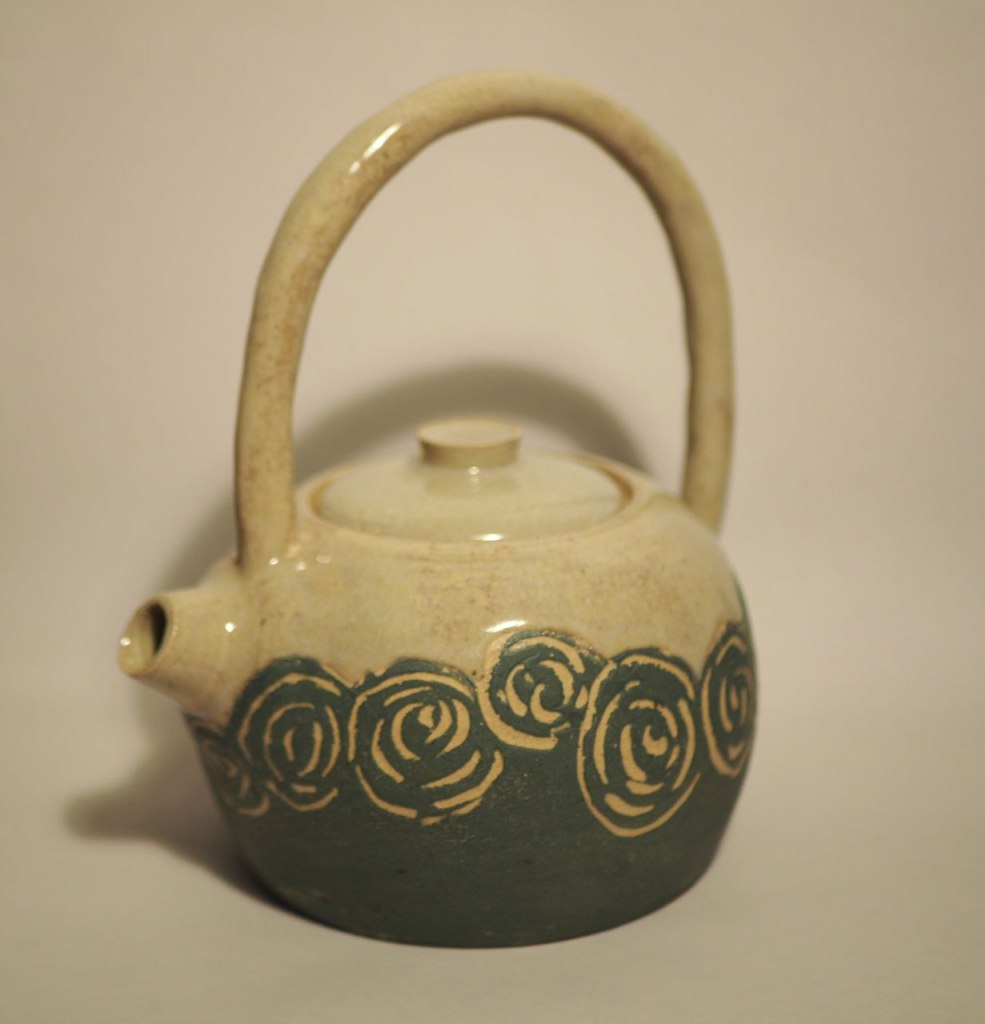
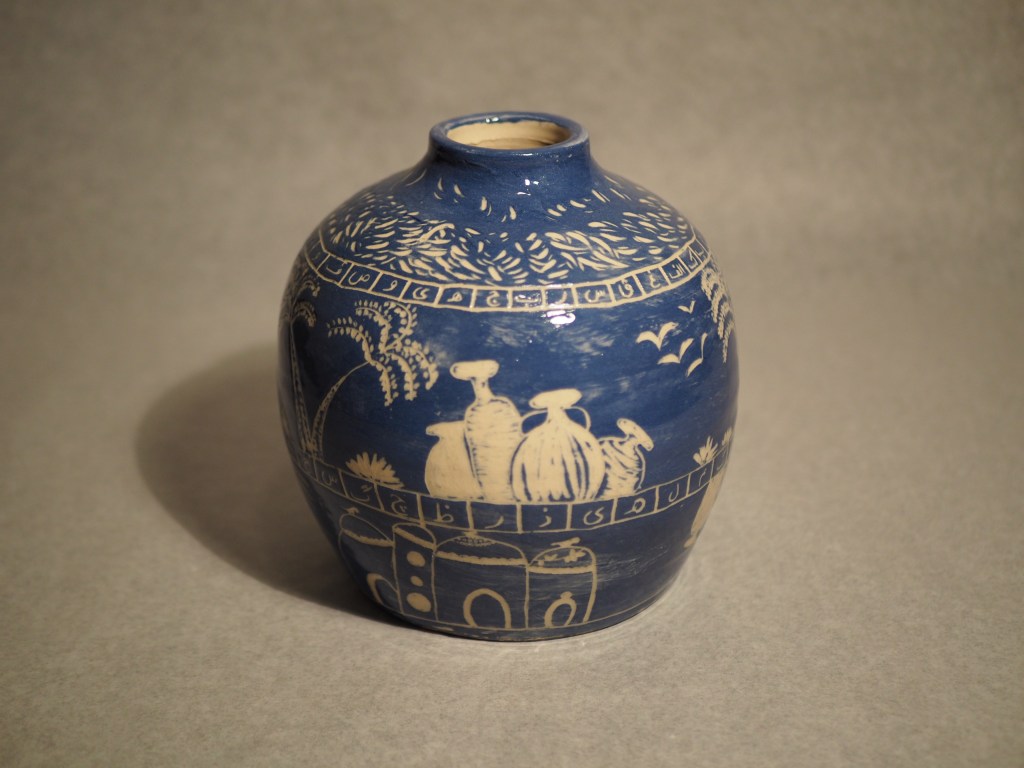
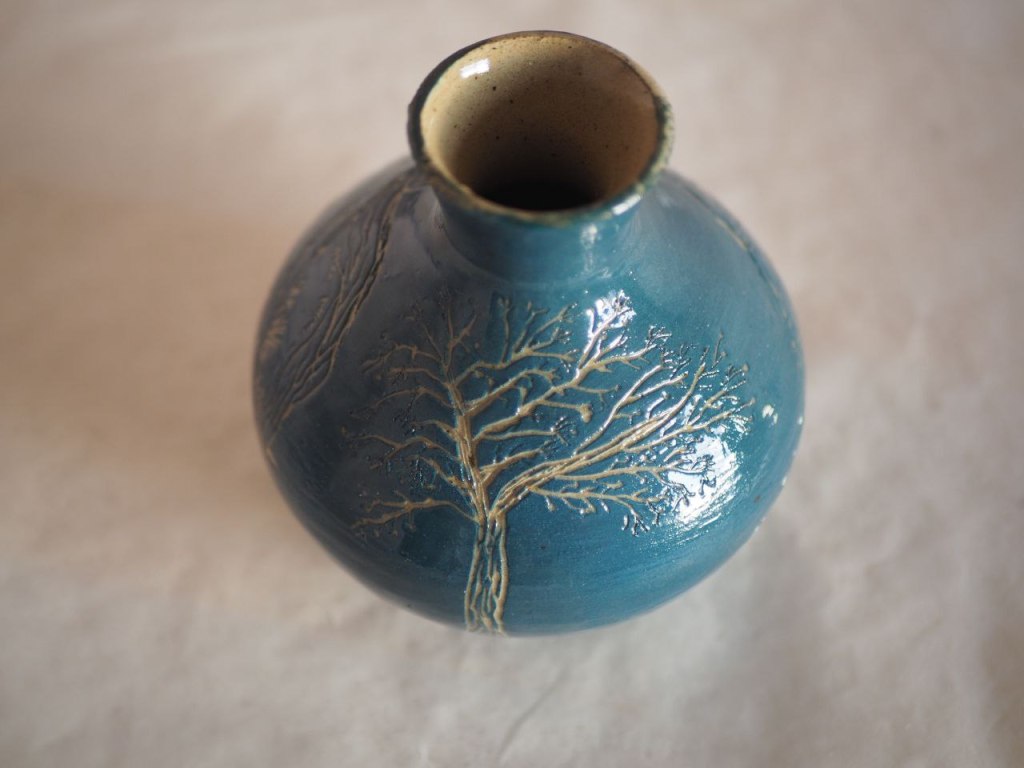
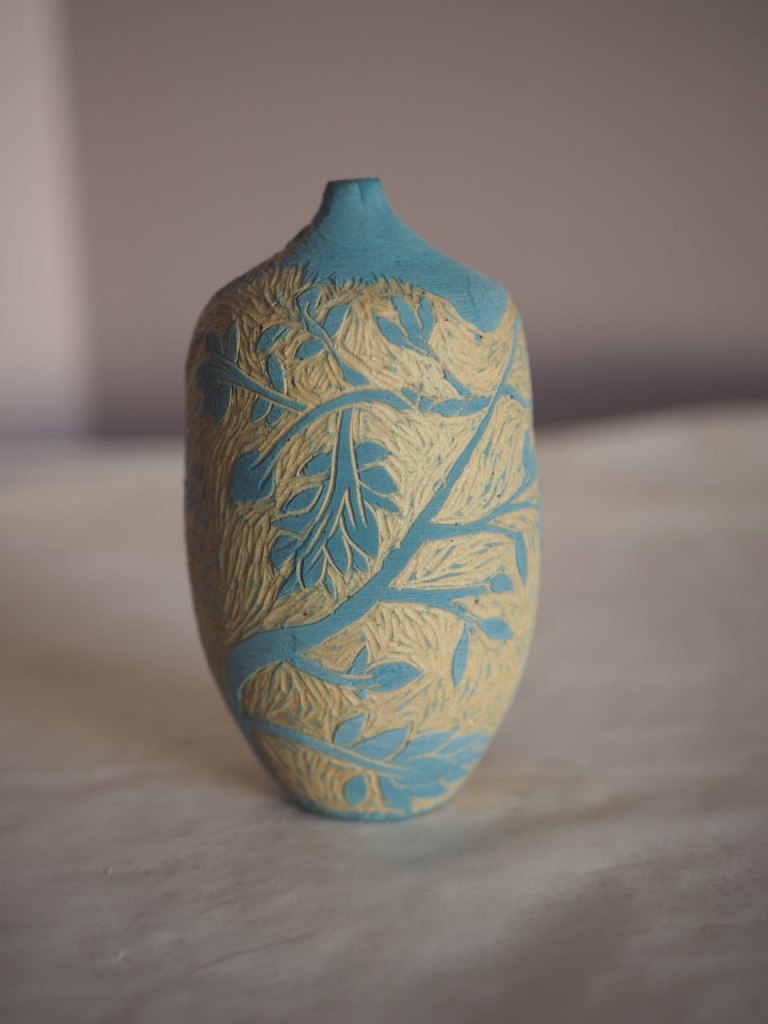
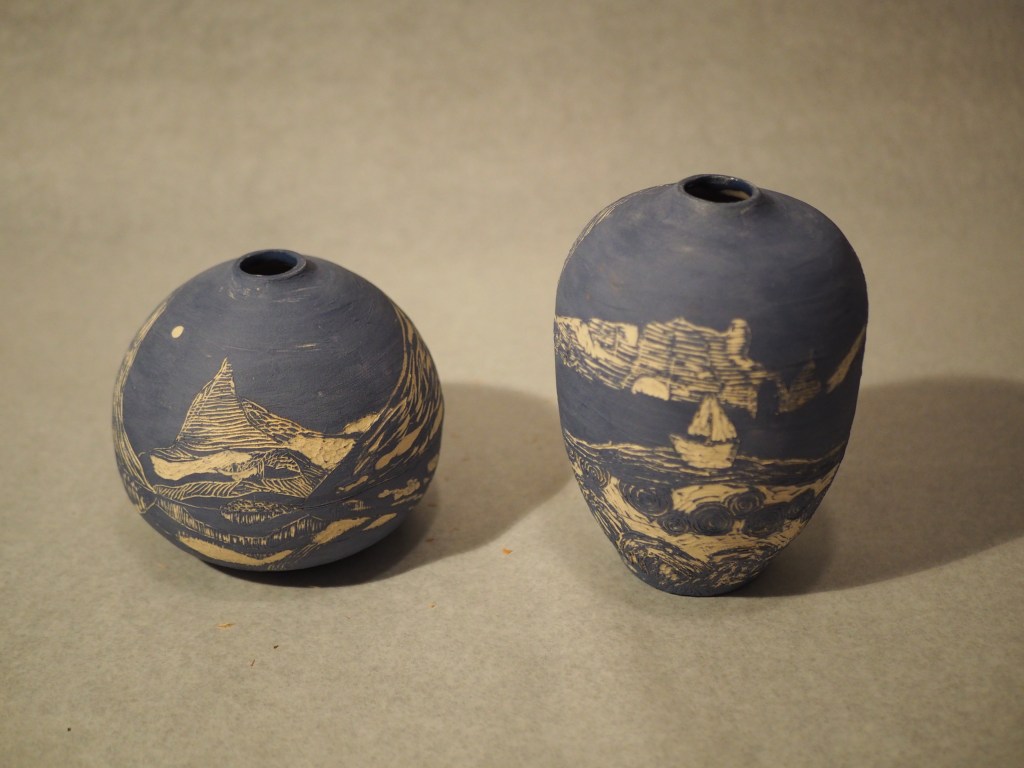
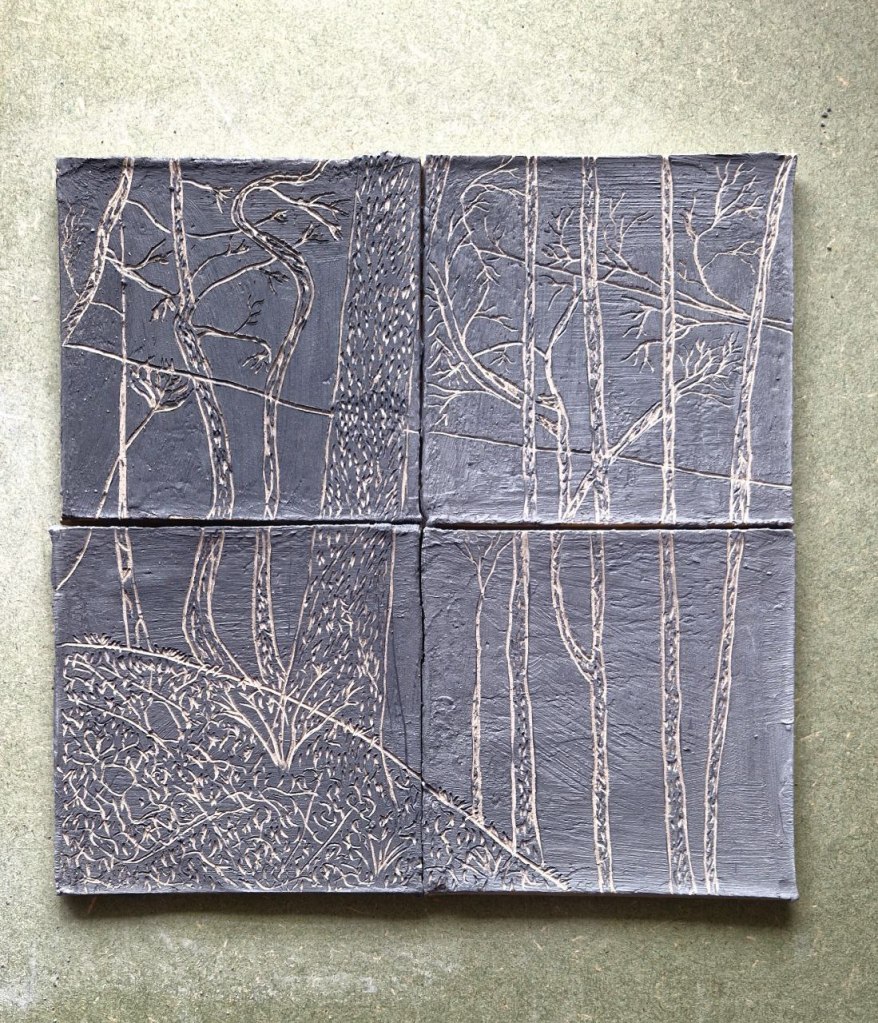
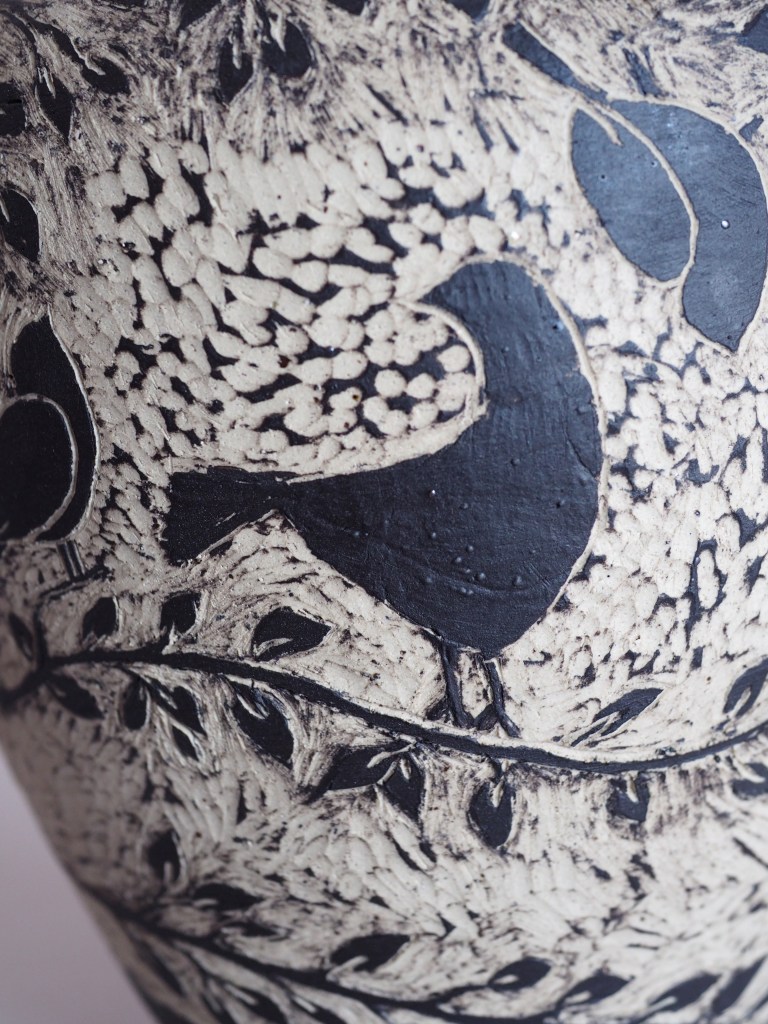
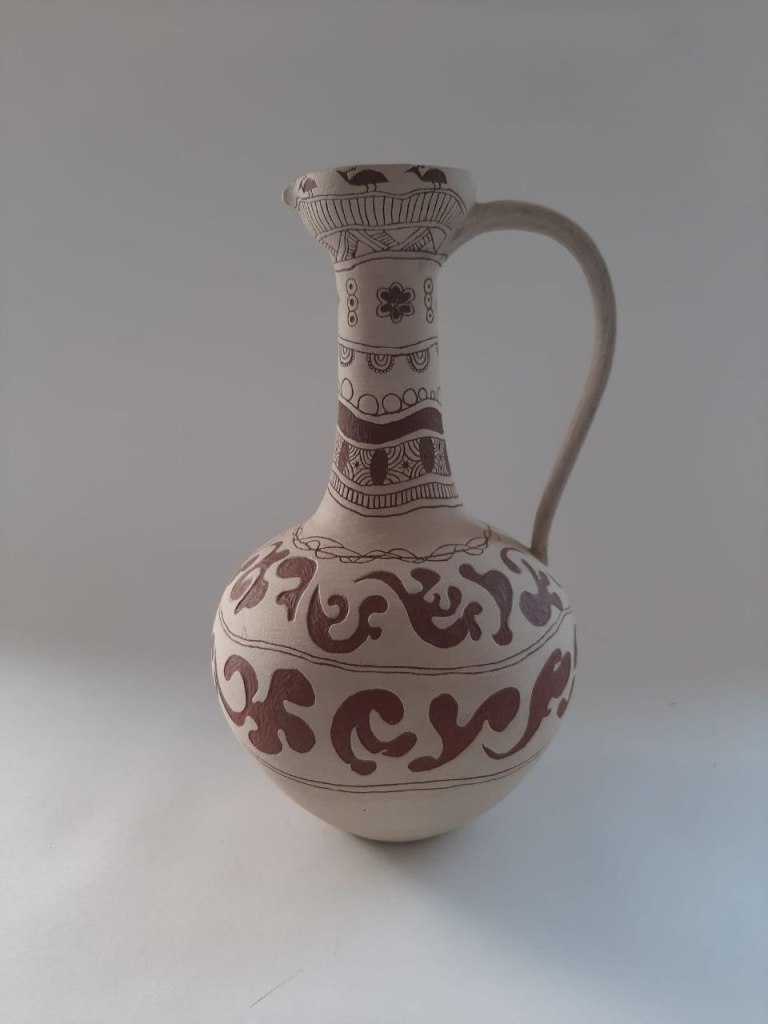
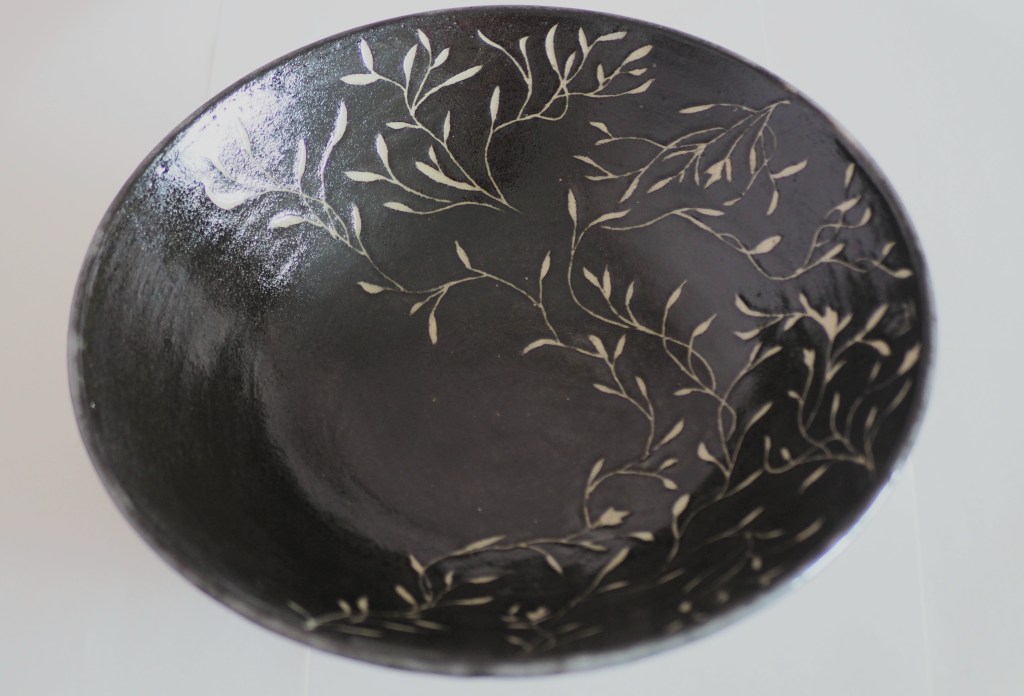
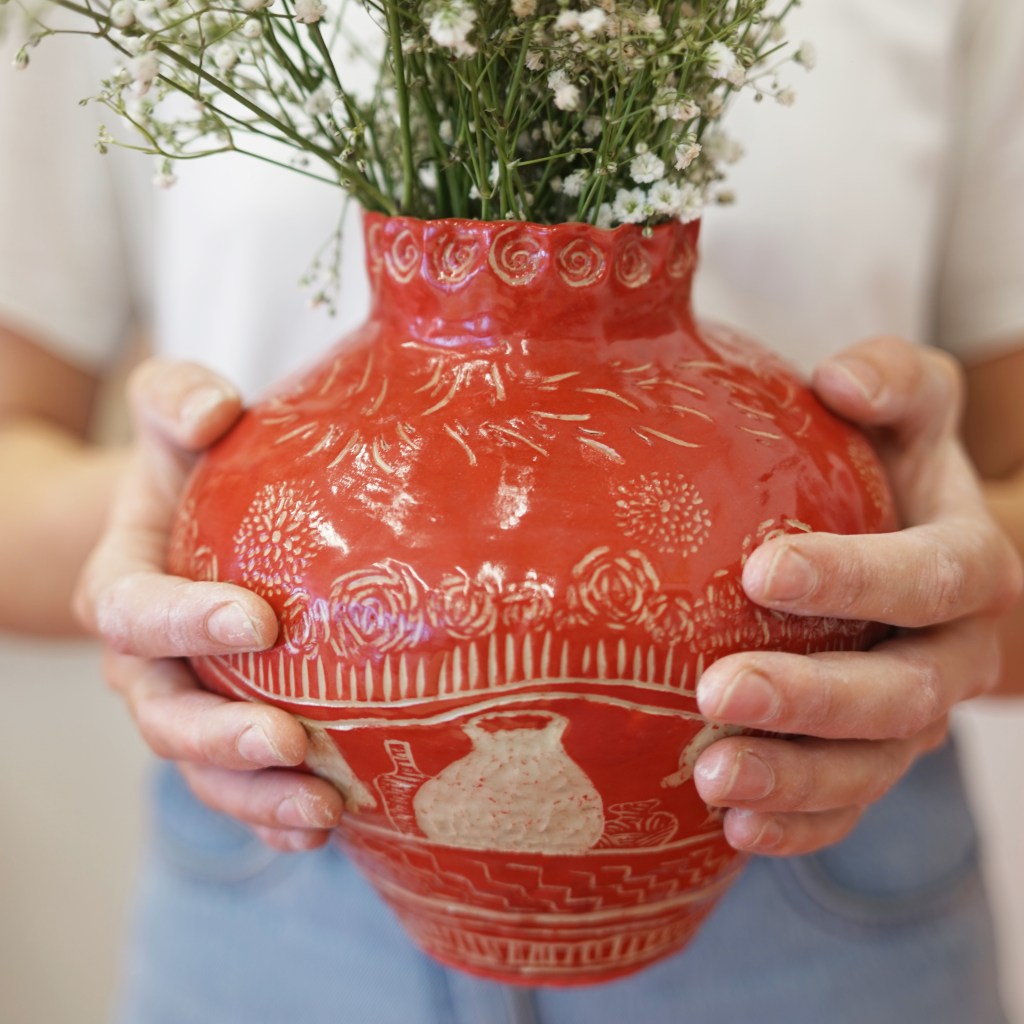
The word Sgraffito comes from the Italian language (“to scratch”), and originally from the Greek γράφειν (gráphein, “to write”). Sgraffito on walls has been used in Europe since classical times. It was popularized in Italy in the 15th-16th centuries and can be found in African art. Sgraffito made its way into art and architecture during the Northern Renaissance, particularly in Germany. Examples of Sgraffito can still be found in places like Florence and Bavaria. It also migrated to the Middle East where it became quite popular in Iran.
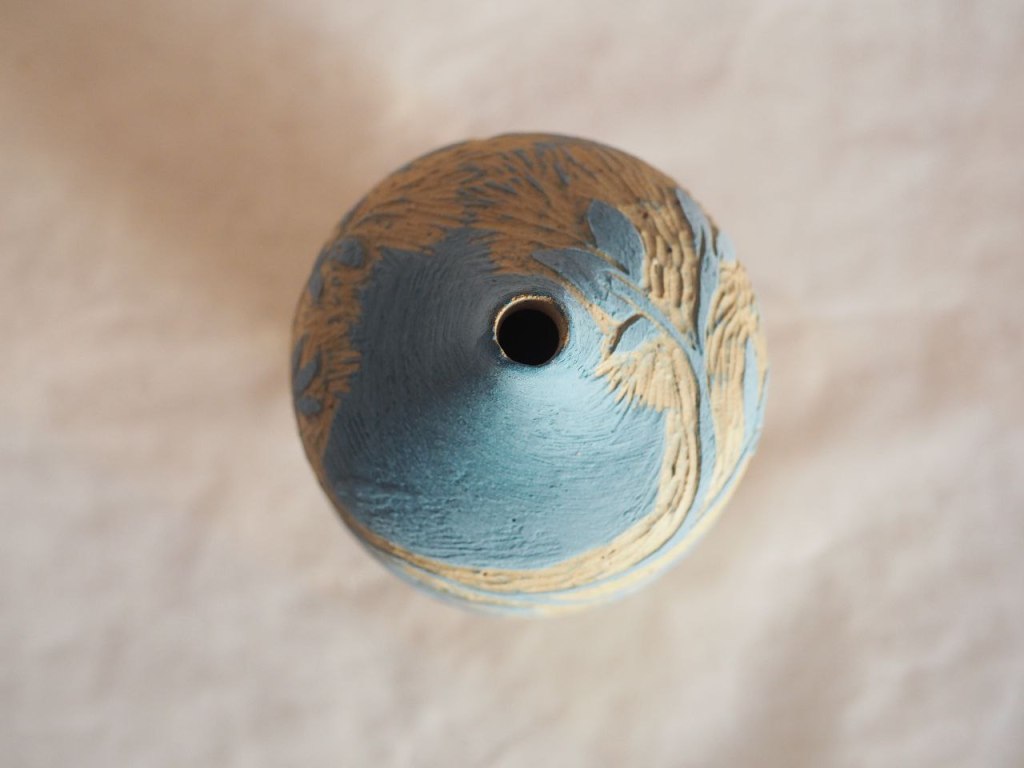
I chose Sgrafitto technique on my pottery not only because it is a very rich and diverse technique that covers a large range of styles from ancient to modern art but also because it represents the journey of my life which made me who I am today. Being a decoration with clay and color pigments with no industrial colored glazes, it also links my work closer to the nature.
Collaborations
Collaborations with Bert Claeys (@bert_draait_door)
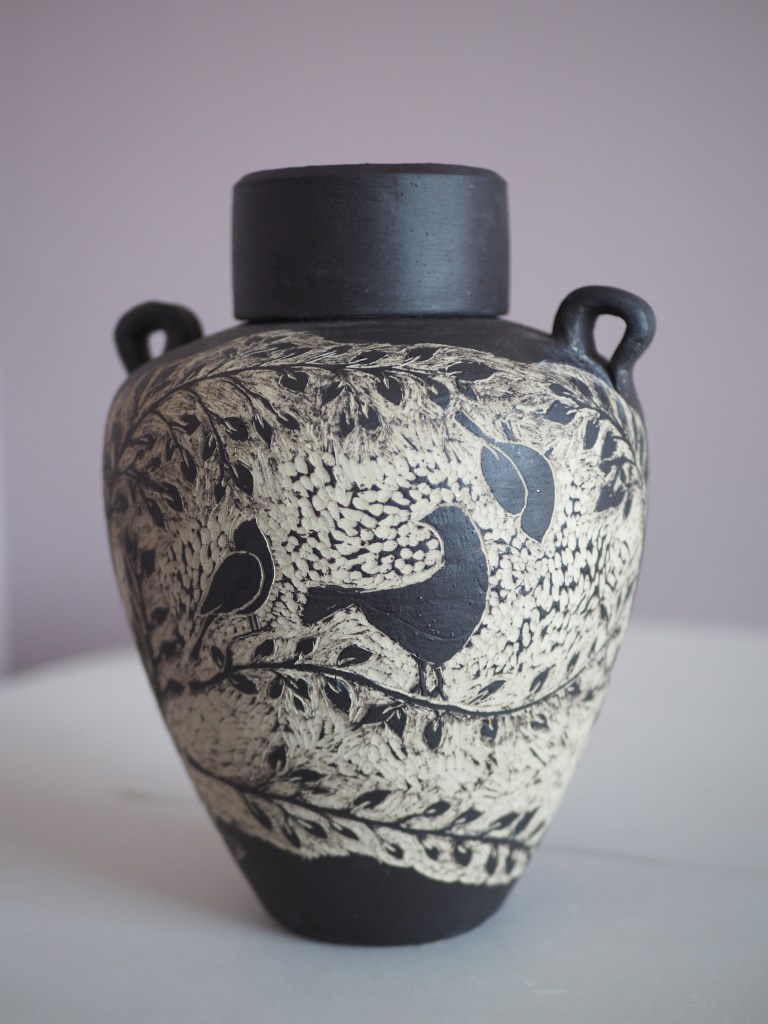
Collaboration with Elke Vanlerberghe (@Lerry Ceramics) for Studio Terrara
 PotteryBeauties